
Enterprise Oral Care & Medical Appliance Lineup
Direct factory manufacturing solutions engineered for global dental healthcare brands, orthodontic chains, and personal wellness distributors.
The Paradigm Shift in Orthodontic & Dental Appliance Hygiene
Transitioning from inefficient chemical effervescent immersion to high-frequency piezoelectric sonic cavitation for clear aligners, retainers, nightguards, and complex bracket systems.
The Biological Challenge of Appliance Biofilm
Modern orthodontics relies heavily on polyurethane and medical-grade thermoplastic clear aligners (such as SmartTrack and Essix materials), as well as complex metallic wire brackets. However, intraoral placement subjects these appliances to continuous exposure to saliva, Streptococcus mutans, Porphyromonas gingivalis, and Candida albicans.
Traditional manual brushing causes micro-abrasions on thermoplastic surfaces, creating deep harbor zones for bacterial accumulation. Chemical soaking tablets often leave unpleasant chemical residues, fail to strip stubborn recalcitrant matrix extracellular polymeric substances (EPS), and degrade polymer clarity over extended wear cycles.
Direct Factory Manufacturing Precision
As a premier OEM/ODM manufacturer headquartered in Shenzhen, China (Shenzhen Cekon Healthy Life Co., Ltd. / TTFACE), we bridge clinical orthodontic requirements with medical electronics production. Operating 100+ injection molding machines, 12 CNC centers, and 12 high-capacity assembly lines under ISO 13485 oversight, we deliver white-label ultrasonic braces cleaners engineered to institutional standards.
Our solutions provide global brand buyers, dental supply distributors, and retail DTC companies with turnkey platforms engineered for maximum acoustic energy transmission, long-term fluid enclosure reliability, and regulatory compliance across North America, Europe, and Asia-Pacific.
Industrial Development & Technology Trends in Braces Cleaning
How physical acoustic energy, hydrothermal micro-cavitation, and UV-C optoelectronics are redefining the global personal appliance sanitization market.
1. Piezoelectric Acoustic Cavitation
The core mechanism of modern braces cleaners relies on high-efficiency piezoelectric ceramic transducers. Operating between 42 kHz and 48 kHz, these transducers induce rapid pressure differential waves within liquid media, generating millions of microscopic microscopic vacuum bubbles.
Upon implosion (cavitation), localized micro-jets produce shear forces exceeding thousands of atmospheres on a microscopic scale. This physical action dislodges calcified plaque, micro-debris, and organic stain polymers from deep undercuts, hinge joints, and interior tray grooves without scratching smooth polymer surfaces.
2. UV-C Photolytic Sterilization
Modern B2B procurement demands dual-action decontamination. Integrating solid-state UV-C LED arrays (emitting at peak germicidal wavelengths between 253.7 nm and 275 nm) directly into the cleaning chamber lid provides active cellular disruption.
The ultraviolet light penetrates bacterial wall membranes, causing thymine dimerization within microbial DNA and RNA structures. This sterilizes organisms resistant to kinetic fluid action alone, achieving a certified 99.999% destruction of odor-causing microbes in under 3 minutes.
3. In-Situ Electrolyzed HOCl Water
Next-generation devices feature titanium-platinum electrolysis cells built into the base reservoir. When ordinary tap water containing trace chloride ions is activated by a low-voltage DC current, hypochlorous acid (HOCl) is generated in-situ.
HOCl acts as an eco-friendly, food-safe sanitizing agent that neutralizes intraoral malodor compounds without needing alcohol, synthetic flavorings, or chemical tablet consumables—creating a zero-waste, cost-effective maintenance ecosystem for consumers.
Information Gain: Thermal Control & Material Integrity
A major failure point in low-grade ultrasonic cleaners is uncontrolled transducer heat transfer, which raises fluid temperatures above 48°C and warps thermoplastic clear aligners (causing lost orthodontic tracking). TTFACE's OEM platform incorporates smart PCB thermal regulation and aluminum-alloy heat sinks, guaranteeing fluid temperatures remain strictly below 38°C throughout consecutive 5-minute cleaning cycles.
Global B2B Procurement Criteria & Sourcing Matrix
Essential engineering parameters, material specifications, and quality benchmarks required by international brands and healthcare buyers.
| Evaluation Parameter | Consumer Grade / Low-Tier Benchmark | TTFACE Enterprise OEM Standard | Clinical & Regulatory Significance |
|---|---|---|---|
| Ultrasonic Frequency | 28 kHz – 35 kHz (Coarse) | 42 kHz – 48 kHz (High-Density) | Prevents physical pitting of thermoplastics while penetrating micro-voids in braces. |
| Tank Inner Lining | Stamped 201 Stainless Steel or ABS plastic | Deep-drawn SUS304 / SUS316 Stainless Steel | Resists corrosion from saline, retains passivation layer, food-contact safe. |
| Waterproof Rating | IPX4 (Splash resistant) | IPX7 Full Immersion Certified | Protects internal high-voltage drive circuitry from rinse water damage and user returns. |
| Acoustic Decibel Output | > 65 dB(A) (Loud vibration noise) | < 45 dB(A) Whisper-Quiet Operation | Enhanced user experience; internal dampening rubber chassis isolates resonant noise. |
| Germicidal Integration | None or decorative blue LEDs | Medical UV-C LED (254nm / 275nm dual chip) | Verified 5-log microbial kill rate against oral pathogens. |
| Circuitry & Driver | Basic RC oscillation circuit | MCU-Controlled Automatic Frequency Sweep | Prevents standing wave dead-zones, ensuring 100% uniform ultrasonic energy coverage. |
Custom Private Labeling & Branding Flexibility
We provide full-spectrum branding options for original equipment manufacturers (OEM):
- CMYK & Pantone Surface Customization: UV coating, soft-touch matte rubberized finishes, electroplated metallic trims, and custom color matching.
- Laser-Etched & Silk-Screened Logos: High-precision brand positioning on aluminum bezels, stainless steel covers, and outer ABS chassis.
- Bespoke Packaging Design: Retail-ready magnetic gift boxes, eco-friendly FSC-certified molded pulp inserts, blister packing, and multi-language instruction manuals.
Supply Chain Scalability & Low MOQ Options
Supporting both established dental corporations and high-growth DTC brands:
- Flexible Order Volumes: Standard OEM private labeling starts from low minimum order quantities (MOQ 1,000 units).
- High-Speed Production Throughput: Over 15,000 units produced daily across 12 automated assembly lines.
- Turnkey Logistics Support: Direct-to-FBA Amazon prep packaging, drop-shipping support, and full DDP/FOB shipping coordination.
Enterprise OEM/ODM Manufacturing Execution
A systematic, transparent product design and manufacturing process from concept ideation to mass delivery.
Feasibility & CAD Tooling
Detailed industrial design (ID) rendering, mechanical layout (MD), and Finite Element Analysis (FEA) acoustic wave simulation. Prototype samples delivered via 3D SLA printing and CNC machining within 7 to 10 days.
Steel Mold Construction
In-house tooling fabrication using S136 hardened stainless steel mold bases, yielding over 500,000 shot lifespans. Tooling completed within 25 to 30 days with first-article inspection (FAI) reports.
SMT & Automated Assembly
Surface-Mount Technology (SMT) component placement for driver PCBA boards, complete with conformal waterproof coating, robotic ultrasonic transducer bonding, and automated housing sealing.
100% Water Sealing & Aging
Every single unit undergoes vacuum leak testing and a continuous 4-hour full-load electrical aging test to eliminate infant mortality rates on piezoelectric components and power supplies.
Acoustic Wattage Calibration
Calibrating output power density (W/cm²) using digital hydrophones to ensure uniform energy distribution without cavitation erosion on the SUS304 tank lining.
Global Export Certification
Final packaging, serialization, drop-testing compliance (ISTA 1A standard), and issuance of COA/COC inspection release documentation for seamless customs clearance.
Global Compliance & International Quality Assurance
Enabling risk-free market launch across the United States, European Union, Japan, and international medical jurisdictions.
International Electrical & Medical Safety
Our OEM manufacturing facility complies strictly with international device and electronic manufacturing guidelines:
- ISO 13485:2016 Certification: Certified Quality Management System specifically tailored for medical devices and dental equipment manufacturing.
- FDA 21 CFR 872 Compliance: Materials and electronics engineered in accordance with US Food and Drug Administration dental device guidance.
- CE & EU MDR 2017/745: Full Declaration of Conformity for the European Union market, including EMC Directive 2014/30/EU and Low Voltage Directive (LVD) 2014/35/EU.
- FCC Part 15 Class B: Tested and certified to ensure zero electromagnetic interference with home electronics or medical monitoring gear.
Environmental & Chemical Safety Testing
Assuring non-toxic, eco-safe contact with intraoral appliances and human tissues:
- RoHS 2.0 & REACH Directives: Heavy-metal-free construction; fully compliant regarding hazardous substances, lead-free soldering, and SVHC chemicals.
- BPA-Free & Food-Contact Grade: Stainless steel tanks and lid components verified via SGS and TÜV chemical extraction testing.
- Localized Packaging & Language Support: Providing customized multi-language warning labels, user manuals (English, German, French, Spanish, Japanese), and region-specific power cords (UL, UKCA, VDE, PSE, SAA).
Engineering Technology Roadmap & Future Outlook
Strategic hardware and software innovations shape the future of personal dental appliance sanitization.
Dynamic Resonance Auto-Tuning
Implementation of adaptive microcontroller circuitry that monitors real-time fluid acoustic impedance. The driver automatically sweeps between 40 kHz (for dislodging macro-particles) and 48 kHz (for ultra-fine micro-void cleaning), optimizing energy transfer regardless of water level or tray load density.
Bluetooth-Connected Compliance Ecosystems
Integrating low-power BLE modules that sync with consumer smartphone applications. The device logs daily sanitization cycles, tracks aligner wear hours, alerts users when to switch to new aligner trays, and automatically reorders cleaning solution or accessories.
Miniaturized GaN Driver Architecture
Replacing traditional iron-core transformer power circuits with Gallium Nitride (GaN) high-frequency switching transistors. This reduces overall power adapter size by 40%, decreases standby power consumption to under 0.1W, and allows ultra-compact, battery-powered portable braces cleaners designed for travel.
AI-Powered Optical Turbidity & Fluorescence Detection
Embedding 405nm ultraviolet-fluorescence sensors inside the cleaning chamber to detect bacterial porphyrins in real time. The device automatically terminates the cleaning cycle only when organic biofilm signals drop below clinical threshold levels, delivering verified proof of cleanliness.
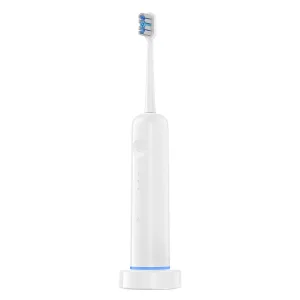
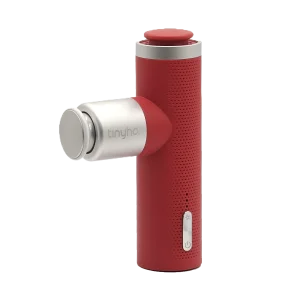
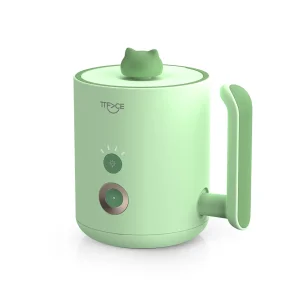
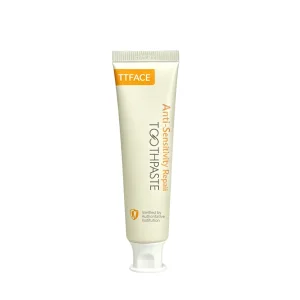
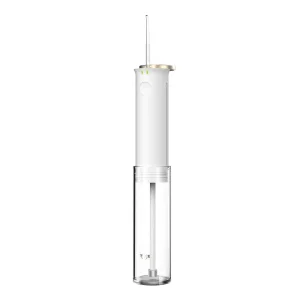
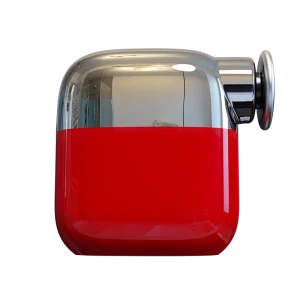
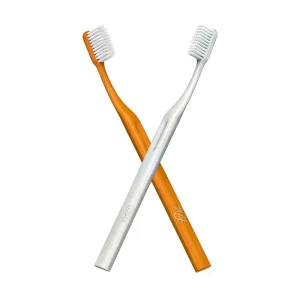
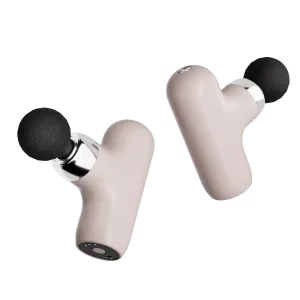
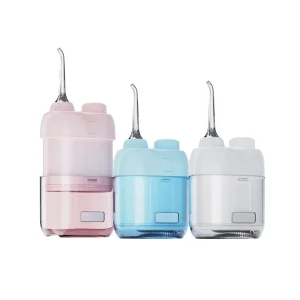
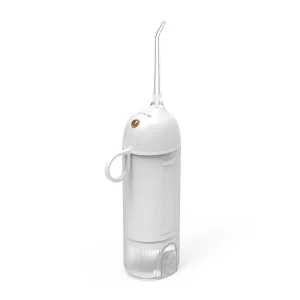
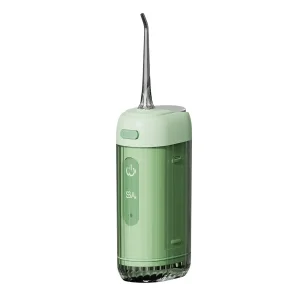
Complete Personal Healthcare & Oral Care Range
Explore our additional OEM/ODM catalog products manufactured under the same strict ISO 13485 quality standards.

Frequently Asked Questions (FAQ) for Global Buyers
Detailed technical, regulatory, and commercial responses for procurement managers and product directors.
Why is 42 kHz – 48 kHz considered the optimal ultrasonic frequency for orthodontic braces and clear aligners?
Lower frequencies (such as 20 kHz – 28 kHz) generate large cavitation bubbles with high implosive shock energy. While effective for industrial engine parts or gross surgical steel instruments, low frequencies can pit, scratch, or micro-fracture delicate thermoplastic clear aligners (e.g., Polyurethane, PETG) and cause solder joint fatigue on delicate orthodontic wire retainers. Frequencies above 42 kHz generate high-density, microscopic cavitation bubbles that safely clean complex micro-geometry, interior tray crevices, and bracket undercuts without causing physical surface degradation or heat deformation.
What minimum order quantity (MOQ) and lead times apply for custom OEM branding?
For standard private label OEM projects (incorporating custom housing colors, silk-screened or laser-engraved logos, and customized packaging), our standard minimum order quantity starts at 1,000 units. Prototype and sample evaluation orders can be dispatched in 3 to 5 working days. Full mass production lead time typically ranges between 20 to 30 calendar days following final artwork approval and deposit confirmation.
How does TTFACE guarantee IPX7 waterproofing on ultrasonic cleaners?
Ultrasonic cleaning devices inherently generate high acoustic vibration that can loosen mechanical seals over time. TTFACE utilizes dual-injection molded liquid silicone rubber (LSR) gaskets, structural ultrasonic welding along housing seams, and conformal hydrophobic silicone coatings across all driver PCBA electronics. 100% of production units undergo automated positive-pressure air decay leak testing prior to final casing assembly, ensuring full IPX7 immersion protection (1 meter depth for 30 minutes).
Can TTFACE support full ODM custom mold creation for unique device geometry?
Yes. Our in-house R&D department includes 30+ specialized industrial, mechanical, and electrical engineers. We handle complete ODM project workflows from conceptual sketch, 3D SLA working prototypes, finite element acoustic modeling, tool design, SMT layout, to steel mold construction. Complete custom ODM development cycles typically take 45 to 60 days from initial design freeze to mass production trial runs.
What testing documentation and compliance certificates are supplied with export orders?
Every shipment is backed by comprehensive quality compliance documentation, including CE Declaration of Conformity, FCC Test Reports, RoHS 2.0 Heavy Metal Verification, REACH Substance of Very High Concern (SVHC) testing, UL/CB electrical safety certificates for power adapters, and SGS Food-Grade SUS304 Material Test Reports. ISO 13485 inspection documentation and Certificate of Analysis (COA) are issued per batch.
How does the device handle heat dissipation during continuous commercial or clinic use?
Continuous ultrasonic operation naturally transfers thermal energy from the transducer element into the liquid reservoir. To protect clear aligner polymer memory, TTFACE integrates an internal aluminum heat-sink chassis coupled with an intelligent NTC thermal sensor. The firmware automatically regulates voltage or pauses transducer output if fluid temperature approaches 40°C, ensuring safe operating conditions under all circumstances.
What packaging and power plug options are available for regional market compliance?
We supply region-specific detachable or hard-wired power adapters including US (UL/FCC), EU (CE/VDE), UK (UKCA/BS), Australia (SAA), and Japan (PSE). Power supplies accommodate universal input voltages (100V – 240V AC at 50/60Hz). Custom retail boxes, inner trays, user manuals, and outer shipping cartons are fully customizable in localized target languages.
What warranty and quality assurance policies does TTFACE provide for international buyers?
We stand behind our factory quality with a standard 12-month to 24-month manufacturer warranty. In the event of functional defects exceeding our contractual quality threshold (<0.3% AQL Major), we provide immediate 1:1 unit replacement or credit compensation in subsequent production orders, supported by root-cause 8D quality analysis reports from our engineering team.