Leading Aligner & Dental Hygiene Systems
High-frequency ultrasonic cleaning solutions engineered for clear aligners, retainers, and specialized oral healthcare appliances.

High-Quality Why Oral Care Gift Boxes Are Premium Corporate Gifting Trend
Custom Packaging Solutions
Clear Aligner Hygiene Evolution & Sourcing Shift
Why professional dental distributors and consumer healthcare brands are re-evaluating aligner cleaning machine manufacturers.
The explosive global growth of direct-to-consumer (D2C) clear aligner therapies (such as Invisalign®, Spark®, and Angelalign®) has triggered a fundamental paradigm shift in post-orthodontic maintenance. Traditional physical brushing of clear aligners with standard toothpastes introduces microscopic abrasive micro-scratches into the medical-grade polyurethane or PETG thermoplastic material. These micro-fissures become ideal breeding grounds for biofilm accumulation, Streptococcus mutans colonization, and severe calcified plaque (tartar) build-up, leading to device clouding, malodor, and potential oral tissue inflammation.
Consequently, global enterprise procurement managers, dental supply chains, and private-label personal care brands require highly specialized Aligner Cleaning Machine Manufacturers capable of designing and mass-producing high-efficiency ultrasonic cleaning devices. True industrial expertise requires moving beyond generic jewelry cleaners toward optimized, medical-adjacent devices tailored specifically for fragile orthodontic polymers, retainers, mouthguards, and sleep apnea appliances.
Micro-Cavitation Integrity
Precise ultrasonic energy creates microscopic vacuum bubbles that implode against aligner surfaces, removing organic debris without damaging delicate thermoplastic structures or flexural modulus properties.
Dual-Action Decontamination
Combining high-efficiency swept ultrasonic frequencies with localized UV-C germicidal LED matrices (265nm-275nm) ensures complete eradication of bacterial biofilms within 3 to 5 minutes.
Global OEM/ODM Scalability
Fully compliant custom manufacturing offering tailored aesthetic housings, multi-voltage switching power supplies, localized regulatory certs, and co-developed firmware.
Ultrasonic Transducer Engineering & Physics
Understanding sweep frequency dynamics, acoustic energy transfer, and thermal management in specialized dental cleaners.
At the core of high-performance aligner cleaning machinery lies the piezoelectric transducer assembly. Unlike standard single-frequency industrial sonic baths operating at a fixed 40 kHz, premium dental-grade aligner cleaners utilize Frequency Sweeping Technology (typically modulating rapidly between 42 kHz and 48 kHz). This architectural distinction is crucial for several key physical reasons:
- Elimination of Standing Waves: Fixed single frequencies create destructive acoustic "hot spots" and "dead zones" inside the stainless steel water basin. Hot spots can cause localized surface pitting or thermal warping in clear plastic aligners, while dead zones leave biofilm uncleaned. Swept frequencies homogenize the acoustic field.
- Cavitation Bubble Micro-Sizing: Higher frequencies (42–48 kHz) generate smaller, more numerous cavitation bubbles compared to lower frequencies (such as 28 kHz used for heavy machinery degreasing). These micro-bubbles penetrate deep into tiny dental tray crevices, attachment wells, and laser-etched tracking numbers without aggressive macro-impact force.
- Transducer Thermal Dissipation: High-efficiency piezoceramic rings engineered with low dielectric loss coefficients prevent thermal energy transfer from the transducer to the cleaning reservoir, ensuring water temperature remains safely below 40°C (104°F) to avoid aligner structural deformation.
| Engineering Parameter | Generic Jewelry Cleaners | Professional TTFACE Aligner Cleaning Machine |
|---|---|---|
| Ultrasonic Frequency | Fixed 35 kHz - 40 kHz (Uneven wave distribution) | Swept 42 kHz - 48 kHz (Uniform acoustic field) |
| Basin Material | Standard 201 Stainless Steel (Prone to chemical pitting) | SUS304 Food-Grade Stainless Steel (Corrosion resistant) |
| Germicidal Sterilization | None or decorative low-power blue LEDs | Dual UV-C LED Array (265-275nm) with verified germicidal efficacy |
| Waterproof Ingress Rating | Unrated or IPX4 (High risk of liquid damage to PCB) | IPX7 Sealing with internal silicone gasket isolation |
| Thermal Rise (10 Min Run) | Rapid rise (>15°C rise, risks warping thermoplastic) | Controlled rise (<4°C rise) via internal heat sinks & airflow design |
OEM & ODM Modular Engineering for Global Brands
From custom industrial housing molds to tailored PCB firmware, we empower brand owners to dominate their regional markets.
Custom Industrial Design & Tooling
Our in-house design studio turns brand identity guidelines into high-end physical products. We execute 3D surfacing, rapid SLA prototyping, and high-precision injection mold building in-house to accelerate time-to-market.
Proprietary Firmware & PCB Assembly
Custom cleaning cycles (e.g., 3-minute quick clean vs. 5-minute deep UV-C cycle), LED indicator animations, capacitive touch panel configurations, and auto-shutoff safety protocols embedded directly into microcontrollers.
Bespoke Retail Packaging & Accessories
Complete unboxing experience engineering including custom rigid magnetic gift boxes, localized multi-lingual instruction manuals, branded cleaning tablets, and custom travel pouch integration.
China Factory 4.0: Manufacturing Excellence
Vertically integrated production infrastructure in Shenzhen guaranteeing unmatched component quality, rapid lead times, and cost efficiency.
100 Injection Molding Presses
High-precision robotics operating in temperature-controlled environments ensure zero distortion in polymer housings, maintaining tight seals for IPX7 water resistance.
12 Advanced CNC Machining Centers
Custom metal tooling, precision transducer mounting blocks, and stainless steel basin forming executed with micron-level tolerances.
12 Automated Assembly Lines
Continuous flow assembly integrated with inline ultrasonic frequency sweep testing, leakage testing, and automated optical inspection (AOI).
By owning every stage of the manufacturing value chain—from raw resin injection molding to SMT PCB placement and final ultrasonic frequency alignment—TTFACE eliminates middleman markups, protects customer intellectual property, and guarantees defect rates below 50 PPM (Parts Per Million).
Global Enterprise Procurement Blueprint & RFP Criteria
A standardized evaluation matrix for procurement managers auditing aligner cleaning machine manufacturers.
When issuing Requests for Proposals (RFPs) or conducting factory audits for oral care appliances, global procurement executives must look beyond surface cosmetic appearance. Evaluating an aligner cleaner factory requires rigorous verification across four key engineering pillars:
1. Electrical Safety & EMI Compliance
High-frequency oscillators can generate significant Electromagnetic Interference (EMI). Ensure your supplier holds valid FCC Part 15/18, CE-EMC, and LVD certifications backed by accredited test reports (SGS, TUV, Intertek).
2. Biological & Chemical Safety
The stainless steel basin and inner plastics come into direct contact with water used for oral devices. Demand food-grade SUS304 verification and RoHS/REACH chemical safety compliance for all wetted components.
3. Accelerated Life Testing Protocols
Verify that units undergo rigorous stress testing prior to batch release: minimum 1,000 continuous operation cycles, 1-meter drop testing onto concrete, and high-humidity/high-temperature storage aging tests.
Regulatory Compliance & Market Access
Navigating international health and safety certifications for hassle-free global customs clearance.
Entering international consumer markets requires navigating complex regional regulatory landscapes. Depending on your target region, aligner cleaning devices fall into specific electrical safety and medical device hygiene categories:
- North America (US & Canada): FCC Certification for high-frequency emissions, UL/ETL electrical safety compliance for AC power adapters, and FDA registration support where sanitization claims are asserted.
- European Union (CE / RoHS / WEEE): Compliance with Low Voltage Directive (LVD 2014/35/EU), Electromagnetic Compatibility Directive (EMC 2014/30/EU), and REACH heavy metal restrictions.
- Global Logistics & Battery Safety: For portable rechargeable battery units, UN38.3, MSDS, and air/sea transport safety documentation are provided for seamless freight forwarding.
Aligner Cleaning Tech Roadmap (2025–2030)
Anticipating next-generation innovations in smart oral appliance care and micro-electronics.
Real-time Turbidity & Biofilm Detection
Optical water clarity sensors dynamically adjust ultrasonic cycle duration based on actual particulate concentration in the tank, optimizing energy use and cleaning efficacy.
Integrated HOCl Electrolysis Modules
Combining ultrasonic cavitation with in-situ generation of Hypochlorous Acid (HOCl) from standard tap water and micro-salt doses for chemical-free 99.999% sterilization.
Orthodontic Compliance Tracking
Bluetooth-enabled cleaners that sync wear-time telemetry to orthodontist dashboards, reminding patients to clean and wear aligners according to prescribed schedules.
Frequently Asked Sourcing Questions
Direct technical answers for B2B buyers, OEM brand managers, and procurement officers.
What is the optimal ultrasonic frequency for clear aligner cleaning machines?
The optimal acoustic frequency for cleaning clear plastic aligners lies between 42 kHz and 48 kHz with frequency sweep functionality. Frequencies below 35 kHz create bubble implosions that are too violent, risking micro-fractures in delicate clear polymer materials. Frequencies above 50 kHz produce bubbles too small to strip stubborn calcified plaque. Sweeping between 42-48 kHz ensures thorough, safe micro-cavitation across the entire tank.
How does TTFACE protect custom OEM industrial designs and IP?
We execute legally binding Non-Disclosure Agreements (NDAs) prior to receiving any CAD files or design briefs. All tooling, molds, and proprietary firmware co-developed with TTFACE remain the exclusive intellectual property of the customer. Molds are maintained in isolated, secure tooling vaults and are never used for third-party production.
What is the standard Minimum Order Quantity (MOQ) and production lead time?
For standard private label OEM orders (custom color, logo printing, localized packaging), our baseline MOQ is 1,000 units with a typical production lead time of 25 to 30 days. For complete custom ODM projects requiring new injection molds and custom PCB engineering, prototype development takes 20-30 days, mold creation takes 35 days, and initial mass production requires 30 days.
Can aligner cleaning machines also clean full dentures and mouthguards?
Yes. Our ultrasonic tanks are engineered with optimal volumetric dimensions (typically 180ml to 250ml capacity) to accommodate clear aligners, Hawley retainers, night guards, sports mouthguards, whitening trays, and full acrylic dentures. The non-abrasive micro-cavitation process is completely safe for acrylics, silicones, and metals.
What quality assurance certifications does your facility maintain?
Shenzhen Cekon Healthy Life Co., Ltd. (TTFACE) operates under ISO 9001 quality management standards. Our products carry CE, FCC, RoHS, and REACH certifications. In-house quality control includes 100% inline electrical safety testing, IPX7 immersion testing, acoustic frequency monitoring, and AQL 0.65 Level II pre-shipment inspections.
How do you handle localized plug types and electrical voltages for global exports?
Our power supplies are designed with wide-voltage switching adapters (AC 100-240V, 50/60Hz) capable of operating anywhere in the world. We offer interchangeable regional AC power cords or detachable USB-C power configurations compliant with US, EU, UK, AU, and JP electrical standards.
Complementary Oral & Personal Care Devices
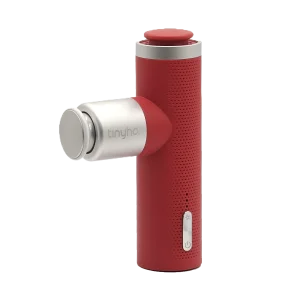
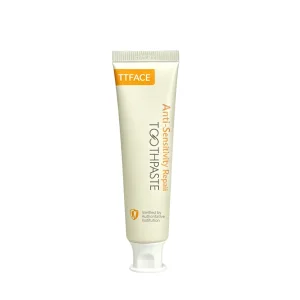
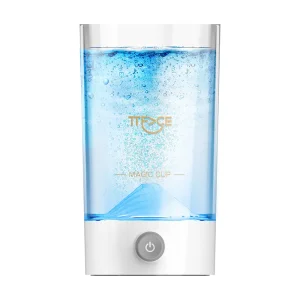
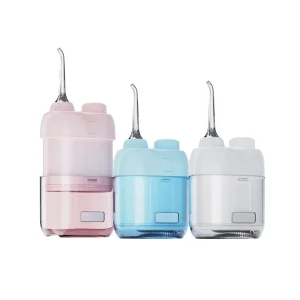
Expand your brand's retail catalog with our vertically integrated OEM/ODM product lines.