Featured OEM/ODM Healthcare & Wellness Solutions
Direct from Verified Precision Electronics Manufacturing Facilities

Global Muscle Massager Commercial Ecosystem & Market Growth
Deciphering consumer search intent, clinical efficacy demands, and global commercial adoption of high-performance percussive therapy devices.
The global market for muscle massagers and percussive therapy devices has undergone a structural shift from a niche athletic recovery gadget to an essential component of personal wellness, clinical rehabilitation, and corporate ergonomic health. Valued at over $3.4 billion USD and projected to expand at a compound annual growth rate (CAGR) exceeding 9.8% through the decade, the industry is witnessing unprecedented demand for high-torque brushless motors, thermal-assisted vibration massage guns, and ultra-portable ergonomic form factors.
Modern consumers and institutional B2B procurement managers no longer seek basic vibratory devices. Search intent analysis across international markets (North America, Europe, Asia-Pacific, and the Middle East) reveals a sharp trajectory toward "depth amplitude," "stall force durability," "quiet brushless motor operation," and "smart pressure sensor feedback." Buyers are actively evaluating factory capabilities based on physical biomechanics and long-term hardware reliability.
Athletic Performance & Muscle Recovery
Elite sports organizations, physical trainers, and commercial gyms require heavy-duty fascia guns offering 50 to 60 lbs of stall force. Deep percussive therapy breaks down myofascial adhesions, increases localized blood flow, and accelerates lactate clearance post-strenuous exercise.
Clinical & Chiropractic Care
Physical therapy clinics integrate precise percussive instruments into patient rehabilitation workflows. Ergonomic, low-vibration handles prevent operator fatigue while variable frequencies (1,200 to 3,200 RPM) allow tailored treatment for delicate cervical regions or dense lumbar muscle groups.
Corporate Ergonomics & Daily Commute
Sedentary lifestyle challenges have sparked demand for ultra-compact, lightweight "pocket massagers" and smart hot-compress fascia guns. Integrated USB-C fast charging and Peltier heating elements deliver instant thermal relief for desk workers suffering from trapezius tightness.
Why Leading Global Brands Partner with Chinese Massager Factories
Exploring the operational scaling, component clustering, and precision manufacturing ecosystem concentrated in Shenzhen and the Greater Bay Area.
China produces over 85% of the world’s percussive therapy and personal massage hardware. This global leadership is not merely built on scale; it is grounded in an unmatched industrial supply chain ecosystem. In hubs such as Shenzhen and Dongguan, every fundamental component—from high-density 18650/21700 lithium battery packs and custom PCB controllers to precision CNC-machined aluminum drive rods and ultra-quiet brushless motors—is manufactured within a 50-kilometer radius.
Agile Prototyping & Rapid Tooling
Chinese tier-1 factories achieve rapid design-to-sample turnarounds. Utilizing high-precision 3D SLA printing, fast tooling aluminum molds, and in-house CNC machining centers, functional massager prototypes are delivered in under 72 hours, reducing product launch cycles by 60%.
Vertical Quality Control Architecture
From automated copper wire motor winding to 100% dynamic balancing of eccentric shafts, internal quality control ensures long service life. Integrated factory testing protocols include continuous 500-hour aging trials under artificial stall loads, thermal imaging, and acoustic chamber verification.
Unrivaled Economies of Scale
Integrated supply networks yield a 35% to 45% cost advantage over Western domestic assembly without sacrificing component quality. High-volume raw material procurement (rare-earth neodymium magnets, aerospace-grade alloy drive shafts) guarantees stable B2B pricing structures.
Comprehensive Factory Benchmarking Matrix: Tier-1 OEM vs. Standard Tier-3 Assembly
| Engineering Benchmark | Tier-1 Integrated Precision Factory | Standard Commodity Assembly Plant |
|---|---|---|
| Motor Architecture | Custom High-Torque Brushless DC (BLDC) Motors | Low-cost Brushed Motors (High friction/heat) |
| Acoustic Level | QuietGlide™ Tech (<38dB - 45dB at Max Speed) | High Noise Level (>58dB - 65dB) |
| Stall Force Capability | 35 lbs to 65 lbs (Heavy-Duty Load Tested) | 12 lbs to 20 lbs (Stalls under light pressure) |
| Battery Management System (BMS) | UL-Certified Cells with NTC Thermal Protection & Auto-Shutoff | Generic Uncertified Li-ion Packs (Higher failure rates) |
| Manufacturing Compliance | ISO 9001, ISO 13485, FDA Registered, CE, RoHS, FCC | Basic Local Business License Only |
| Life Expectancy | 3,000+ Operational Hours | 300 to 500 Operational Hours |
Anatomy of a High-Quality Percussive Therapy Device
Deconstructing the physical componentry, electrical engineering, and acoustic damping technologies that define commercial-grade muscle massagers.
Understanding the internal dynamics of a fascia gun is critical for OEM brand managers and sourcing directors. Quality failures in low-tier massagers usually stem from three core areas: thermal overload in brushed motors, stripping of plastic drive gears, and premature lithium battery degradation. Premium manufacturing facilities solve these challenges through precise mechanical engineering.
1. Brushless DC (BLDC) Motor Engineering
High-end massagers utilize 24V or 16.8V brushless motors equipped with NdFeB (Neodymium Iron Boron) permanent magnets. Without carbon brushes to create friction, energy efficiency increases by 40%, thermal dissipation is optimized via internal aluminum heat sinks, and operational lifespan increases tenfold.
2. Dual-Bearing Transmission Rod Assembly
To convert rotary motion into high-frequency linear stroke percussion without rotational wobble, advanced factories employ self-lubricating, dual-bearing linkage rods fabricated from aircraft-grade aluminum alloys or polyether ether ketone (PEEK) high-strength composites.
3. Intelligent BMS & Thermal Safety Protocols
Safety compliance requires multi-stage Battery Management Systems (BMS). High-quality factories integrate NTC thermistors to monitor cell temperatures continuously, preventing thermal runaway. Overshoot current protection automatically halts operation if stall pressure exceeds safe electronic limits.
4. Acoustic Enclosure & Vibration Decoupling
Noise pollution destroys user experience. Premier factories isolate motor vibrations using silicone dampening gaskets and multi-stage acoustic baffles. Soft-touch silicone outer shells absorb handle vibration, insulating the user’s hand from strain while suppressing noise under 45 dB.
Market Trends & Next-Generation Massager Engineering
From AI pressure-sensing chips to semiconductor thermal head modules: where percussive therapy technology is heading in 2026 and beyond.
The muscle massager segment is undergoing rapid technological convergence. Leading Chinese manufacturing hubs are leading the development of multi-functional wellness devices that combine kinetic percussion with real-time biological feedback and thermal conditioning.
Thermal & Peltier Cooling Integration
Next-generation hot compress fascia guns integrate thermoelectric Peltier modules. Users can switch between 45°C hot compress for muscular warm-ups and 10°C cold therapy to alleviate acute inflammation within seconds, all driven by a centralized power core.
AI Pressure Feedback & Dynamic Speed Adjust
Embedded MCU microprocessors analyze real-time motor resistance. As the user applies greater force against dense muscle fascia, the AI algorithm automatically scales motor torque to maintain steady percussive stroke depth without stalling or over-stressing tissue.
Micro-Miniaturization (Pocket & Travel Guns)
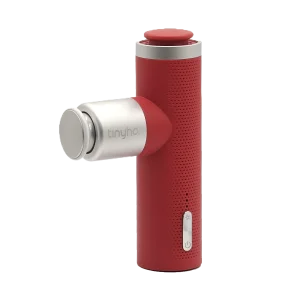
Advances in high-torque density miniature brushless motors allow factories to build pocket-sized massagers weighing under 350 grams while delivering 30 lbs of stall force. These units fit into handbags, appealing to urban professionals and mobile lifestyle users.
Global Regulatory Compliance & Factory Selection Framework
Essential certification roadmaps for importing muscle massagers into North American, European, and Asia-Pacific markets.
Procuring hardware from overseas factories requires careful verification of international safety, electronic, and battery transportation standards. Failing to audit factory credentials can lead to customs seizures, product recalls, or brand reputation damage.
| Target Region | Mandatory Regulatory Standards | Factory Technical Documentation Required |
|---|---|---|
| North America (USA & Canada) | FDA Class I/II Device Listing, FCC Part 15B, UL 2054 (Battery Pack), Prop 65 Compliance | FDA Owner/Operator Number, FCC Declaration of Conformity, UL Test Reports for Lithium Battery |
| European Union (EU) | CE-EMC, CE-LVD, RoHS 2.0 (2011/65/EU), REACH, WEEE Directive | Declaration of Conformity (DoC), Full Chemical Substance Lab Analysis, Technical Construction File |
| Global Air / Sea Logistics | UN38.3 Lithium Battery Safety Standard, MSDS (Material Safety Data Sheet) | 1.2m Drop Test Certification, Air/Sea Transport Safety Assessment Reports by CNAS/ILAC Labs |
| Quality Management Systems | ISO 9001 (General Quality), ISO 13485 (Medical Device Manufacturing Quality) | Annual Audit Certificates, Traceability Flowcharts, Incoming Quality Control (IQC) Protocols |
5-Step B2B Procurement Protocol for Private Label Brands
- Specification Definition: Establish target amplitude (e.g., 10mm for consumer fitness, 14mm+ for professional athletics), stall force (30lb–60lb), noise tolerance (<45dB), and battery capacity (2000mAh–3000mAh).
- Factory Audit & Engineering Review: Request evidence of in-house tooling, CNC capacity, and automated motor winding lines. Confirm ISO 9001 / ISO 13485 accreditation.
- Sample Stress Testing: Subject pre-production samples to continuous stall load testing, thermal imaging during 30-minute full-speed runs, and drop tests from 1 meter.
- Pre-Shipment Quality Inspection (PSI): Ensure third-party inspectors (AQL 1.5/4.0 standard) evaluate functional assembly, cosmetic finish, noise levels, and packaging integrity before balance payment release.
- After-Sales Logistics & Spare Parts: Negotiate 1% to 2% spare motor/PCBA units for localized warranty service support.
Frequently Asked Sourcing & Technical Questions
Comprehensive answers to common questions asked by B2B buyers, distributors, and product development managers.
What is the technical difference between vibration massagers and true percussive therapy devices?
Vibration massagers primarily stimulate surface skin tissue using low-amplitude, high-frequency vibratory motion (typically stroke length under 6mm). In contrast, true percussive therapy devices feature stroke amplitudes ranging from 10mm to 16mm. This mechanical depth reaches deep muscle tissue, physically breaking down fascial restrictions and promoting neuromuscular recovery without numbing surface skin.
Why is stall force critical when selecting a muscle massager factory?
Stall force measures the maximum downward pressure a massager can withstand before the motor bogs down and stops spinning. Inferior massagers stall easily under modest pressure (10–15 lbs). Professional-grade fascia guns engineered by leading factories maintain active stroke percussion under 40 to 60 lbs of applied force, which is essential for working on large muscle groups like glutes, quads, and hamstrings.
What are standard Minimum Order Quantities (MOQs) for OEM/ODM massager manufacturing?
For standard OEM private labeling (custom logo printing on existing factory housings and customized packaging), typical MOQs range from 500 to 1,000 units per order. For deep ODM customization (custom industrial design, new injection mold tooling, and proprietary PCBA firmware development), MOQs generally start at 3,000 to 5,000 units to amortize engineering tooling investment.
How do factories maintain low noise levels (<45dB) in high-power massagers?
Achieving quiet operation requires three integrated engineering solutions: 1) Brushless DC motors that eliminate brush contact noise; 2) Precision CNC-machined dynamic linkages that prevent mechanical backlash wobble; and 3) Acoustic dampening enclosures lined with shock-absorbing silicone gaskets that insulate high-frequency resonance within the housing.
What certifications are required to ship lithium-battery massagers internationally?
Every shipment containing rechargeable lithium-ion batteries requires UN38.3 test reports, an MSDS (Material Safety Data Sheet), and a 1.2-meter drop test assessment for air and ocean freight. For regional market access, products must comply with CE-EMC/LVD and RoHS in Europe, and FCC and UL battery safety standards in North America.
What is the typical production lead time for an OEM massager order?
Sample turnaround for standard off-the-shelf factory units takes 3 to 5 business days. Customized private label samples require 7 to 12 days. Full-scale mass production for a standard container order (2,000 to 5,000 units) typically requires 25 to 35 calendar days following artwork approval and deposit receipt.
Complete Personal Care & Health Appliance Range
High-Quality Manufacturing Solutions for International Distributors