
Featured OEM/ODM Oral Care Innovations
Explore our top-tier export-ready dentifrice formulations and personal wellness hardware platforms manufactured in Shenzhen.

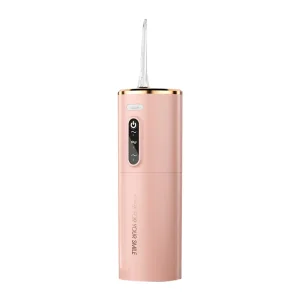
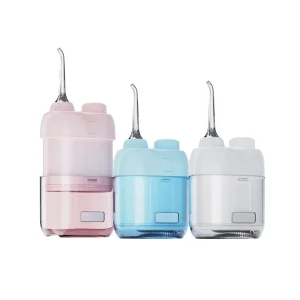
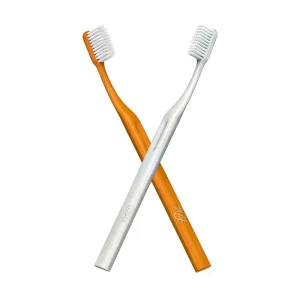
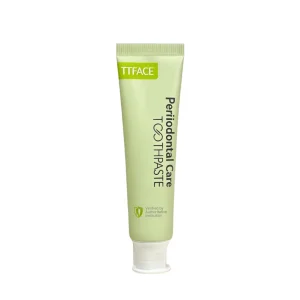
Executive Industry Overview: The Biomimetic Revolution in Oral Care Manufacturing
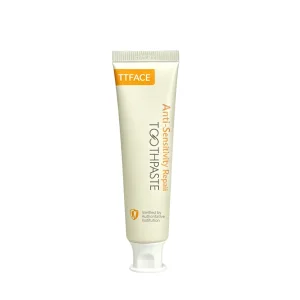
Understanding why leading oral health brands, pharmaceutical distributors, and retail private labels are shifting from traditional fluoridated formulations to synthetic Hydroxyapatite dentifrices.
Stoichiometric Hydroxyapatite
Synthetic Hydroxyapatite ($\text{Ca}_{10}(\text{PO}_4)_6(\text{OH})_2$) matches the exact chemical crystalline matrix of human tooth enamel (97% HAp) and dentin (70% HAp), providing true biomimetic re-mineralization without synthetic chemicals.
Dentin Tubule Occlusion
Particle size optimization between micro-HAp ($1\mu m - 5\mu m$) and nano-HAp ($20nm - 100nm$) physically seals exposed dentinal tubules, completely eliminating hypersensitivity to thermal and osmotic pressure changes.
Non-Toxic & Swallow-Safe Profile
Eliminates systemic risk of dental fluorosis and toxicity, making Hydroxyapatite the ideal functional ingredient for pediatric, maternity, and post-surgical oral care products for global clean-label markets.
Biochemical Mechanism: How Hydroxyapatite Replaces & Outperforms Fluoride
In acidic environments (pH < 5.5) caused by dietary sugars and bacterial metabolism, enamel undergoes demineralization, losing calcium and phosphate ions into the saliva. Traditional dentifrices rely on Sodium Fluoride (NaF) or Stannous Fluoride ($\text{SnF}_2$) to convert hydroxyapatite into fluorapatite ($\text{Ca}_{10}(\text{PO}_4)_6\text{F}_2$). While fluorapatite resists acid dissolution slightly better, it requires bio-available calcium ions to form effectively.
In contrast, Hydroxyapatite Toothpaste delivers direct calcium ($\text{Ca}^{2+}$) and phosphate ($\text{PO}_4^{3-}$) ion reservoirs in a molar calcium-to-phosphorus stoichiometry of exactly 1.67. Upon topical application, HAp crystallites adsorb onto the bacterial pellicle and enamel micro-fissures, forming a dense synthetic enamel layer. This layer acts as a sacrificial barrier against dietary acid attacks while continuously releasing free ions into sub-surface carious lesions.
Formulation Ingredient Benchmark: HAp vs. Conventional Active Ingredients
| Active Ingredient | Biomimetic Mechanism | Dentin Tubule Occlusion | Systemic Toxicity Risk | Abrasivity Profile (RDA Range) | Target Demographic Application |
|---|---|---|---|---|---|
| Nano/Micro Hydroxyapatite (HAp) | Direct crystal replacement & enamel matrix bonding | Complete physical tubule plug ($98.4\%$ efficacy) | Zero (100% Biocompatible / Swallowable) | Ultra-Low (RDA 30 - 60) | Pediatric, Sensitive Gums, Whitening, Orthodontic |
| Sodium Fluoride (NaF) | Fluorapatite formation via salivary calcium substitution | Minimal (Requires potassium nitrate assistance) | Moderate (Risk of fluorosis if swallowed) | Moderate to High (RDA 70 - 140) | Standard Adult Anti-Cavity Care |
| Stannous Fluoride ($\text{SnF}_2$) | Tin-ion precipitation layer on enamel surface | Partial tubule occlusion via tin salt deposits | Moderate (Can cause extrinsic staining) | Moderate (RDA 80 - 120) | Desensitizing & Periodontal Care |
| Calcium Sodium Phosphosilicate (NovaMin) | Bioactive glass reacting with saliva to form HAp | Moderate to High tubule occlusion speed | Low (Aqueous sensitivity during manufacturing) | Moderate (RDA 60 - 90) | Clinical Hypersensitivity Treatment |
Global Commercial Dynamics & International Regulatory Frameworks
Navigating market shifts, consumer preferences, and European/North American regulatory compliance for Hydroxyapatite dentifrices.
European Union (EU SCCS/1658/23) Regulations
The Scientific Committee on Consumer Safety (SCCS) issued definitive safety guidelines regarding Nano-Hydroxyapatite in cosmetic products. Manufacturers exporting to the EU must ensure nano-HAp particles are non-needle-like, rod-shaped or spherical, with a minimum purity of 98.5%, and incorporated at concentrations up to 10% in toothpaste formulations. OEM contracts must include full characterization data (XRD, TEM, BET surface area analysis).
North American (US FDA & Health Canada) Compliance
In North America, Hydroxyapatite is sold as a premium fluoride-free cosmetic dentifrice for enamel whitening and anti-sensitivity. For brand owners seeking anti-caries structure/function marketing claims under FDA OTC monograph standards, strict master file submission and stability protocols apply. Private label contract manufacturers must maintain active FDA Establishment Registration and Drug Master Files (DMF).
Localized Application Scenarios & Targeted Market Formulations
From pediatric care to post-bleaching clinical recovery, discover customized formulation architectures engineered for specific market segments.
Clinical Hypersensitivity & Dentin Therapy
HAp Dosage: 10% - 15% Micro/Nano Blend
Key Additives: Potassium Nitrate, Potassium Citrate
RDA Target: 30 - 40 (Ultra Gentle)
Clinical Purpose: Formulated for severe root exposure, periodontal recession, and immediate post-scaling thermal sensitivity management.
Pediatric & Toddler Swallowable Dentifrice
HAp Dosage: 3% - 5% Nano-HAp
Key Additives: Xylitol, Organic Fruit Extracts, Calendula
RDA Target: 20 - 30 (Soft Gel)
Clinical Purpose: Zero fluoride toxicity for infants learning to brush. Remineralizes primary teeth while remaining 100% safe if swallowed accidentally.
Cosmetic Whitening & Post-Bleaching Repair
HAp Dosage: 5% HAp + Hydrated Silica
Key Additives: PAP (Phthalimidoperoxycaproic acid), PAP-S, Zinc Citrate
RDA Target: 60 - 70
Clinical Purpose: Fills microscopic surface pores caused by peroxide bleaching gels, restoring natural translucent enamel luster without erosion.
Orthodontic & Bracket Decalcification Care
HAp Dosage: 8% HAp + Bioactive Glass
Key Additives: Cetylpyridinium Chloride (CPC), Hyaluronic Acid
RDA Target: 40 - 50
Clinical Purpose: Prevents White Spot Lesions (WSLs) around clear aligners and metal brackets while soothing inflamed gingival tissues.
Natural Organic & SLS-Free Daily Toothpaste
HAp Dosage: 5% Synthetic HAp
Key Additives: Sodium Cocoyl Glutamate, Coconut Oil, Peppermint
RDA Target: 50 - 60
Clinical Purpose: Formulated for clean-label natural wellness channels. Completely free from Sodium Lauryl Sulfate, parabens, and artificial dyes.
Technology Roadmap & Next-Generation Formulation Innovations
Our R&D engineering trajectory for biomimetic dentifrice manufacturing over the next five years.
Phase 1: Biomimetic Co-Precipitation & Particle Aspect Tuning
Optimizing high-shear ultrasonic synthesis to manufacture rod-shaped Hydroxyapatite nanoparticles with controlled crystal aspect ratios (length-to-width 3:1), maximizing crystal binding affinity to enamel enamelin proteins.
Phase 2: Multi-Ionic Doped HAp (Zinc, Fluoride & Strontium Co-Doping)
Integrating substituted metallic cations into the crystal lattice: $\text{Zn}^{2+}$ for sustained antimicrobial enzyme inhibition, $\text{Sr}^{2+}$ for osteogenic root stem cell activation, and trace $\text{F}^-$ substitution for acid-resistant crystalline shielding.
Phase 3: Amelogenin Peptide Self-Assembled Matrix
Blending synthetic peptide fragments mimicking amelogenin proteins, directing Hydroxyapatite crystallites to self-assemble into organized prismatic enamel rod structures directly on tooth surfaces in real-time.
Phase 4: Smart Triggered Release Micro-Fluidic Encapsulation
Developing pH-responsive polymer microcapsules that encapsulate concentrated HAp slurries, releasing mineral actives selectively when salivary pH drops below 5.2 during dietary carbohydrate consumption.
China Supply Chain Resilience & Manufacturing Superiority
Why partnering with a Shenzhen-integrated contract manufacturer gives global brands an unassailable speed, quality, and margin advantage.
Vertical Upstream Chemical Integration
Located in the heart of China’s advanced chemical and pharmaceutical industrial corridor, our facilities maintain direct bulk raw material synthesis pipelines for pharmaceutical-grade Hydroxyapatite, hydrated silica, humectants, and botanical flavor oils, shielding partners from global ingredient price volatility.
Cleanroom Infrastructure & Automated Mixing
Operates ISO 22716 / GMPC Class 100,000 cleanrooms featuring automated 3000L vacuum homogenizing emulsifiers. Vacuum mixing eliminates micro-aeration, ensuring uniform viscosity, zero bubble formation, and perfectly consistent HAp dispersion across multi-ton production batches.
Agile OEM/ODM Turnaround Times
Rapid R&D sampling within 48 to 72 hours, backed by full custom formulation matching (rheology, color, paste opacity, foaming profile, and custom flavor pairing). Mass production lead times scaled down to 14 business days from packaging sign-off.
Eco-Friendly Packaging Turnkey Integration
Complete integration with Sustainable Packaging formats: Recyclable Aluminum Tubes, Post-Consumer Recycled (PCR) HDPE, and Dual-Chamber Airless Pump Dispensing systems designed specifically to prevent oxidation and loss of volatile active essential oils.
Localization Support, Quality Testing & Full Assurance Protocols
Rigorous physical, chemical, and microbiological compliance testing designed to protect global brand reputation.
Strict Laboratory Testing Matrix (ISO 11609 Dentifrice Standards)
Every commercial batch produced in our facilities undergoes multi-stage quality assurance prior to batch release authorization:
- Relative Dentin Abrasivity (RDA) Testing: Verified radiotracer assay profiling to ensure abrasivity values match specified targets (RDA 30 to 80), protecting vulnerable tooth enamel from mechanical wear.
- Pellicle Cleaning Ratio (PCR) Evaluation: Quantitative spectrophotometric analysis measuring stain removal capability to optimize the balance between cleaning power and gentle action.
- Viscosity & Thixotropic Stability: Rheological testing across varying shear rates and temperatures ($4^\circ\text{C}$ to $55^\circ\text{C}$) to guarantee zero phase separation, bleeding, or tube clogging throughout a 36-month shelf life.
- Heavy Metal & Impurity Testing: Inductively Coupled Plasma Mass Spectrometry (ICP-MS) screening guaranteeing Lead (<2ppm), Arsenic (<1ppm), Mercury (<0.1ppm), and Cadmium (<0.5ppm) standards far stricter than US FDA and EU directives.
- Microbiological Challenge Testing: USP <61> and <62> microbial limit checks confirming zero Total Aerobic Microbial Count (TAMC < 100 CFU/g) and absence of Escherichia coli, Staphylococcus aureus, and Pseudomonas aeruginosa.
Frequently Asked Sourcing & Manufacturing Questions (Q&A)
Answers to critical questions procurement managers, formulation scientists, and brand directors ask when sourcing Hydroxyapatite Toothpaste.
What is the difference between Nano-Hydroxyapatite (nHAp) and Micro-Hydroxyapatite ($\mu\text{HAp}$) in toothpaste formulation?
Nano-Hydroxyapatite typically features particle crystallite sizes ranging between 20 to 100 nanometers. Due to its ultra-high surface area to volume ratio, nHAp penetrates deeper into microscopic enamel pores and sub-surface carious lesions, delivering rapid remineralization. Micro-Hydroxyapatite ($1\mu m - 5\mu m$) is larger and excels primarily at physically plugging exposed dentinal tubules to eradicate sensitivity. Many of our custom OEM formulations utilize a dual-phase nano/micro blend to achieve both surface repair and deep tubule sealing simultaneously.
Is Hydroxyapatite Toothpaste completely compliant with EU Cosmetics Regulation 1223/2009?
Yes. Following the EU Scientific Committee on Consumer Safety (SCCS/1658/23) opinion, Hydroxyapatite (nano) is permitted in cosmetic toothpastes at concentrations up to 10%, provided the particles are non-needle-like, possess a purity $\ge 98.5\%$, and are fully characterized. Our manufacturing facility provides full Cosmetic Product Safety Report (CPSR) documentation, TEM imaging, XRD crystal characterization, and Safety Data Sheets (SDS) required for immediate EU CPNP portal notification.
What are the Minimum Order Quantities (MOQs) for Private Label Hydroxyapatite Toothpaste OEM/ODM?
Our standard MOQ for fully customized private label Hydroxyapatite toothpaste formulations starts at 10,000 units for standard laminate tubes, and 5,000 units for airless pump bottle formats. For initial market trial orders or brand launch evaluation batches, we offer flexible low-MOQ pilot programs using stock packaging configurations and proven formula bases.
Can Hydroxyapatite be formulated alongside Fluoride, or must it be Fluoride-Free?
Hydroxyapatite can be formulated as a 100% Fluoride-Free standalone active, or co-formulated with Sodium Fluoride (1000ppm - 1450ppm F) to create a high-performance hybrid dentifrice. Studies indicate that combining HAp with Fluoride creates a synergistic effect, forming Fluor-hydroxyapatite crystals that display superior acid resistance compared to fluoride alone.
How do you ensure Hydroxyapatite does not settle or agglomerate during toothpaste storage?
Sedimentation and particle agglomeration are prevented through precise rheology modification. Our formulation scientists utilize a thixotropic polymer network combining Carboxymethyl Cellulose (CMC), Xanthan Gum, and Hydrated Silica matrices produced under high-vacuum, high-shear emulsification ($3000\text{ RPM}$). This maintains uniform suspended HAp dispersion throughout a 3-year shelf life under varying thermal conditions.
What custom flavors, colors, and textures can be engineered for private labels?
We provide full cosmetic customizing: Flavors include Spearmint, Peppermint, Sweet Cinnamon, Charcoal Matcha, Bubblegum (pediatric), and Botanical Lavender Mint. Textures range from opaque white glossy paste, clear pearlized gels, to dual-stripe paste formats. We can also integrate natural botanical oils (tea tree, clove, coconut) and whitening enzymes (papain, bromelain).
What lead times should international buyers expect from contract signing to shipment delivery?
Sample creation and formulation matching require 3 to 5 business days. Once packaging artwork is approved and deposit confirmed, mass manufacturing and tube printing are completed within 15 to 20 days. Export shipping options include fast air freight (5-7 days) or ocean sea freight (20-35 days depending on destination port).
Does your factory support full international compliance documentation for custom registration?
Absolutely. We provide complete regulatory dossier packages including ISO 22716 / GMPC Certificates, Certificate of Free Sale (CFS), Certificate of Analysis (COA) per batch, Heavy Metal & Microbiological Test Reports, Stability Data Summaries, and MSDS/SDS documentation tailored for FDA, EU, ASEAN, and Middle East registration needs.
Complementary Smart Oral Care Hardware Portfolio
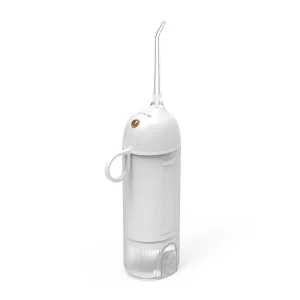
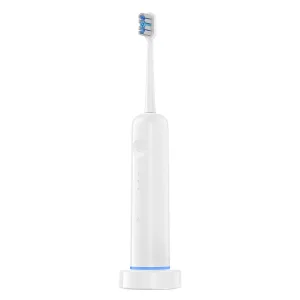
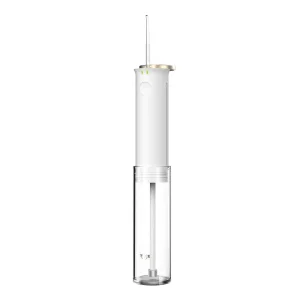
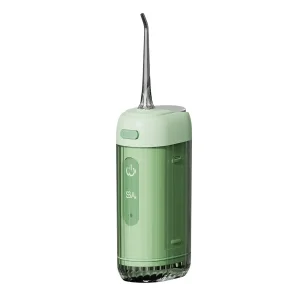
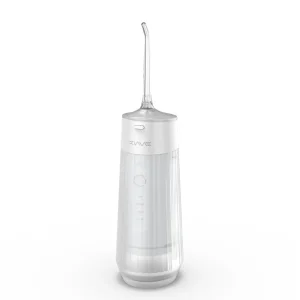
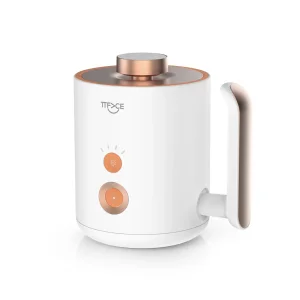
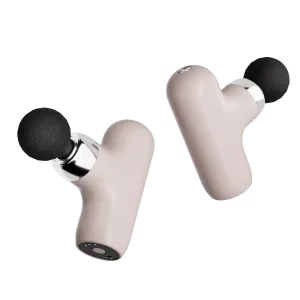
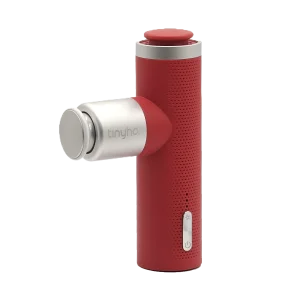
Pair high-performance Hydroxyapatite dentifrices with our patented sonic toothbrushes, water flossers, and ultrasonic cleaning devices.
Initiate Your Custom Hydroxyapatite OEM Project Today
Partner with Shenzhen Cekon Healthy Life Co., Ltd. (TTFACE) to scale your oral care line with scientifically proven, export-compliant Hydroxyapatite dentifrices and personal hygiene hardware.