
1. Executive Summary & Market Paradigm Shift: Electrochemical Oral Care Technology
The global dental and personal hygiene market is experiencing a structural shift toward chemical-free, point-of-use antimicrobial solutions. Historically, commercial mouthwashes relied heavily on synthetic antibacterial agents such as chlorhexidine (CHX), cetylpyridinium chloride (CPC), and high-percentage ethanol formulations. While effective at temporary bacterial inhibition, long-term exposure to alcohol-based rinses has been linked to mucosal irritation, dysbiosis of the oral microbiome, enamel staining, and cytotoxic side effects on fibroblasts.
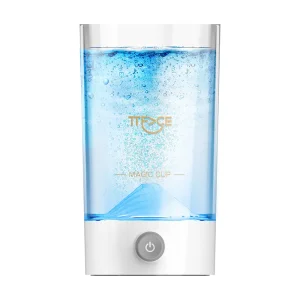
The emergence of Electrolytic Rinse Cups—also known colloquially as HOCl Periodontal Care Cups, Electrolyzed Water Mouthwash Generators, or SPE/PEM Oral Care Vessels—represents a milestone in personal health engineering. By passing low-voltage direct current (DC) through tap water containing trace mineral ions ($Cl^-$), these specialized devices synthesize fresh, highly unstable, yet biocompatible Hypochlorous Acid (HOCl) on demand. HOCl is the exact natural oxidizer produced by human neutrophils during phagocytosis to neutralize pathogens.
2. Global Enterprise Sourcing Intent & Macro Procurement Demand
B2B procurement directors, medical device distributors, and private-label brand managers searching for reliable Electrolytic Rinse Cup Suppliers must evaluate both macro-market forces and micro-level product execution. Over the past three years, consumer demand for sustainable, non-toxic, and tech-integrated home health appliances has surged. Key market drivers include:
- Growth of Orthodontic & Periodontal Patient Populations: Patients undergoing clear aligner therapy (e.g., Invisalign), fixed brace treatments, or dental implant surgery require ultra-gentle, highly effective daily debridement solutions that prevent plaque accumulation without compromising soft tissue healing.
- E-Commerce Supply Chain Optimization: Traditional bottled mouthwash incurs heavy freight costs due to liquid mass and volume. Sourcing concentrated electrolytic generation hardware shifts the revenue model from low-margin liquid shipping to high-margin personal care electronics, hardware subscriptions, and replaceable electrode modules.
- Corporate Wellness & Eco-Compliance Initiatives: Global consumers and ESG-driven retailers demand the elimination of single-use high-density polyethylene (HDPE) mouthwash bottles. A single electrolytic rinse cup replaces over 120 plastic bottles annually per user.
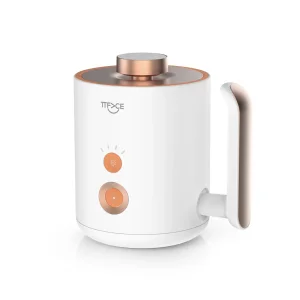
| Evaluation Criterion | Legacy Bottled Mouthwashes | High-Quality Electrolytic Rinse Cups (TTFACE) |
|---|---|---|
| Active Mechanism | Chlorhexidine, Alcohol, Synthetic Chemicals | Electrolyzed Hypochlorous Acid (HOCl) & Hydroxyl Radicals |
| Biological Cytotoxicity | Moderate to High (Mucosal Drying) | Zero Cytotoxicity (Physiologically Compatible pH 5.5–6.5) |
| Microbial Kill Rate | Slow Kill Kinetic (~60-120 seconds) | Rapid Oxidation (<15 seconds for 99.99% Pathogen Eradication) |
| Environmental Footprint | High Plastic Waste & Carbon Logistics | Zero Plastic Consumables; Reusable Medical-Grade ABS/PC |
| Per-Use Cost (Consumer) | Recurring Liquid Purchase ($0.25–$0.50/use) | Near-Zero Operating Cost (Tap Water + Electricity) |
3. Technological Architecture & Electrochemical Engineering Roadmap
Engineering a commercial-grade electrolytic rinse cup demands advanced material science and power management. At Shenzhen Cekon Healthy Life Co., Ltd. (TTFACE), our internal R&D division has developed proprietary electrochemical micro-cells that overcome the primary technical failures common in low-tier competitive units, such as electrode passivation, heavy metal leaching, uncalibrated chlorine gas evolution, and seal degradation.
3.1 Advanced SPE/PEM Titanium Electrode Coating
The core engine of an electrolytic rinse cup is its catalytic electrode assembly. Substandard manufacturers utilize cheap stainless steel or raw titanium plates, which corrode within months and release hazardous nickel or chromium ions into the solution. TTFACE utilizes Grade 1 Pure Titanium substrate plates coated with multi-layer Ruthenium-Iridium (Ru-Ir) or Platinum (Pt) noble metal oxides using Thermal Decomposition Physical Vapor Deposition (PVD).
Anode Reaction: $2Cl^- \rightarrow Cl_2 + 2e^-$ and $2H_2O \rightarrow O_2 + 4H^+ + 4e^-$
Solution Hydrolysis: $Cl_2 + H_2O \rightleftharpoons HOCl + H^+ + Cl^-$
Cathode Reaction: $2H_2O + 2e^- \rightarrow H_2 + 2OH^-$
This balanced micro-electrolysis maintains an ideal active chlorine concentration between 10 PPM and 50 PPM at a skin-neutral pH of 5.5 to 6.8, eliminating harsh bleach odors while maximizing bio-availability.
3.2 Integrated Micro-Fluidic & Smart Power Control
To deliver consistent oral care efficacy across varying global tap water mineralities (ranging from soft mountain tap water to hard municipal water), our devices integrate constant-current PCB controllers. Smart microprocessors monitor electrical impedance in real-time, dynamic-adjusting voltage output between 3.7V and 5.0V to maintain exact HOCl concentration targets without risking accidental chlorate overproduction.
4. Global Market Landscape & Turnkey Macro Solutions
Different international target demographics require customized product configurations. TTFACE offers adaptable manufacturing frameworks to suit disparate sales channels:
Clinical & Orthodontic Dental Chains
Specialized rinse generation cups engineered for chairside dental prophylaxis, post-operative periodontal wash down, and patient home-care prescriptions. Features medical-grade autoclavable reservoirs and timer presets.
Direct-to-Consumer (DTC) Wellness Brands
Sleek, minimalist aesthetic designs featuring RGB LED electrolysis indication halos, inductive wireless charging bases, magnetic travel caps, and companion mobile application connectivity for brushing tracking.
Senior Care & Pharmacy Retail
Simplified single-touch operational interfaces tailored for elderly users and denture wearers. Combines HOCl generation with ultrasonic 45kHz micro-cavitation to deep-clean removable appliances simultaneously.
5. Vertically Integrated Manufacturing Excellence: The TTFACE Advantage
Located in Longhua District, Shenzhen—the world's hub for advanced hardware engineering—Shenzhen Cekon Healthy Life Co., Ltd. operates a fully integrated 20,000+ square-meter manufacturing infrastructure. Unlike trading intermediaries who outsource assembly to unverified third parties, TTFACE controls every single phase of hardware creation under one roof.
5.1 Tooling & Precision CNC Machining
Our facility houses 12 state-of-the-art CNC machining centers alongside 100 high-precision injection molding presses. This allows us to cut steel tooling in-house, achieving microscopic tolerances (≤ 0.01mm) on internal O-ring seal grooves and fluidic channels. Waterproof performance is rated at IPX7 and IPX8, guaranteeing complete immersion safety when submerged under bathroom sinks.
5.2 Automated Assembly & Quality Assurance (QA) Protocols
Operating 12 dedicated assembly lines with over 500 trained operators, TTFACE executes strict multi-stage quality control checks throughout the manufacturing workflow:
- IQC (Incoming Quality Control): X-ray fluorescence spectrum testing of titanium raw materials and noble metal coatings to ensure zero heavy metal contamination.
- IPQC (In-Process Quality Control): 100% automated high-pressure pneumatic sealing tests for every water tank chassis before electronic PCB installation.
- FQC (Final Quality Control): Electrolysis titration and ORP sensor calibration verifying that every batch produces exact target PPM concentrations within 30 seconds.
- OQC (Out-going Quality Control): Drop tests, thermal shock testing (-20°C to +70°C), lithium battery aging cycles, and export packaging vibration analysis.
6. Localization, Regulatory Compliance & Risk Mitigation for Importers
Navigating cross-border medical device and consumer electronics regulations is a major hurdle for global importers. Partnering with TTFACE mitigates regulatory friction. Our engineering documentation and production lines adhere to international certification standards:
| Target Region | Mandatory Compliance Standards | TTFACE Engineering Provision |
|---|---|---|
| North America (USA/Canada) | FDA Accession, FCC Part 15B, UL 2054 (Battery), Prop 65 | FDA-cleared food-contact polymers, FCC EMC testing reports, UN38.3 battery safety documentation. |
| European Union (EU) | CE-EMC, Low Voltage Directive (LVD), RoHS 2.0, REACH, WEEE | Full Technical Construction Files (TCF), CE Declarations of Conformity, lead-free solder assembly. |
| Japan & South Korea | PSE Mark (Japan), KC Certification (Korea) | Customized localized power adapters and battery protection ICs meeting localized safety laws. |
7. Future Technology Roadmap: AI-Assisted Electrochemical Oral Healthcare
The next decade of personal health devices will bridge hardware engineering with artificial intelligence. TTFACE's R&D roadmap focuses on three key technological shifts currently in prototype development:
- Biosensor-Integrated Electrolysis: Integration of saliva pH and electrical conductivity micro-sensors inside the rinse cup rim. The device dynamically calculates the exact microbial load of the user's oral cavity and automatically adjusts the electrolysis duration and PPM concentration tailored to real-time oral health needs.
- Solid Polymer Electrolyte (SPE) Proton Exchange Membrane (PEM) Cell Scaling: Micro-miniaturizing pure water electrolysis technology, allowing zero-saline pure HOCl generation even in ultra-distilled water environments without requiring added salt tabs.
- IoT Oral Health Diagnostics: Smart rinse cups connected via BLE 5.3 to healthcare provider dashboards, enabling periodontists to remotely monitor patient rinsing compliance and post-surgical tissue recovery metrics.