
7 Natural Mouthwash Buying Tips for Global Buyers
Table of Contents
- Define the Oral-Care Need: WHO Estimated 3.5 Billion Cases in 2022
- Check Natural Claims Against Labeling Rules in Each Target Market
- Screen Ingredients and Safety Using FDA Cosmetic-Labeling Requirements
- Compare Active Ingredients: ADA-Accepted Fluoride Rinses Help Prevent Cavities
- Assess Supplier Quality, Stability, Packaging, and Export Documents
- FAQS
- Conclusion
- Related Posts
Natural Mouthwash is no longer a niche shelf choice. Global buyers face a crowded category, varied ingredient lists, and consumers who want a fresh taste without unclear promises. The stakes are real: the World Health Organization’s Global Oral Health Status Report 2022 estimates that oral diseases affect nearly 3.5 billion people worldwide. That figure is not a mouthwash sales forecast, but it shows why product quality and accurate information matter.
The market is expanding, too. Grand View Research’s 2024 mouthwash market analysis estimated global sales at USD 7.12 billion in 2023 and projected continued growth through 2030. Growth alone does not prove a product works. Buyers still need to examine active and supporting ingredients, flavor, packaging, shelf stability, supplier documentation, and the evidence behind each claim. Small details count. A cloudy bottle, for example, may prompt questions about appearance expectations, not automatically signal poor quality. Taste matters. So does transparent sourcing.
This guide presents seven practical buying tips for global procurement teams. It focuses on decisions buyers can verify, from requesting complete specifications to checking that marketing language matches the available evidence. A polished label is not enough. Even experienced teams can overlook a detail when comparing samples under time pressure; that is worth admitting. The goal is not to treat “natural” as a guarantee, but to assess the product carefully and choose suppliers who can explain what is inside, how it is made, and what the evidence supports.
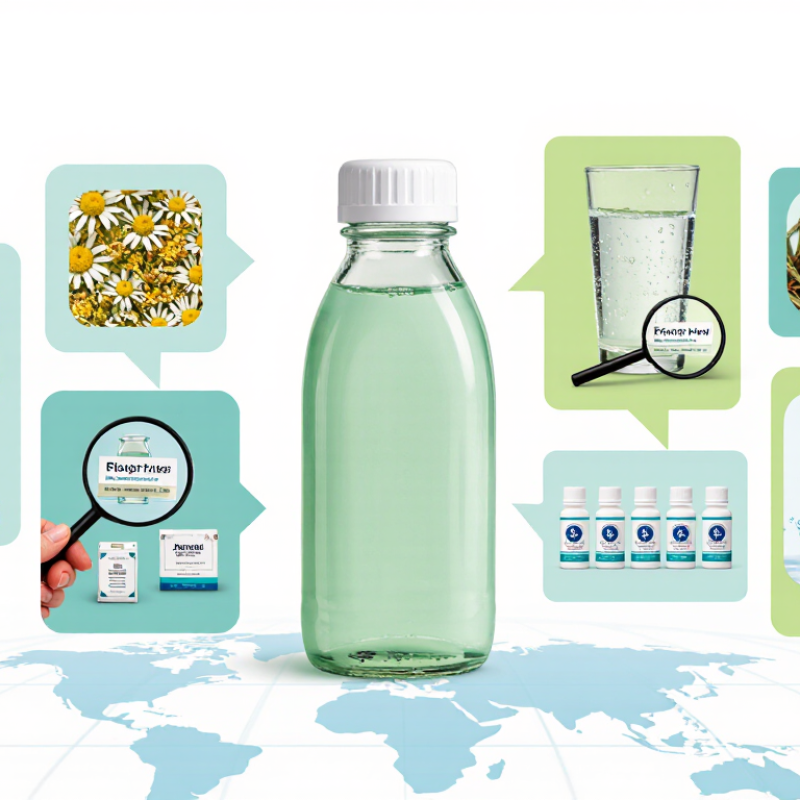
Define the Oral-Care Need: WHO Estimated 3.5 Billion Cases in 2022
The World Health Organization estimated that oral diseases affected nearly 3.5 billion people in 2022. That figure describes a broad health burden, not demand for mouthwash alone. Buyers should define the problem a product is meant to address: fresh breath, a dry-mouth sensation, or support for daily plaque control. These needs are not interchangeable.
Be specific. A shopper seeking a gentle daily rinse may prefer a clearly listed formula and straightforward use directions. Someone with persistent pain, bleeding gums, or mouth sores needs dental advice, not a stronger rinse. Mouthwash is not a substitute for brushing, cleaning between teeth, or professional care. That distinction is easy to overlook.
For global sourcing, examine the ingredient list, intended users, flavor strength, and stability information. “Natural” is not a clinical standard, and plant-derived ingredients can still irritate some mouths. Ask suppliers for reliable product specifications and evidence supporting stated benefits; avoid claims that imply treatment or guaranteed prevention. Check whether directions are understandable across languages and suitable for the intended market. A small detail matters: a sharp mint flavor may feel refreshing to one user and harsh to another. User testing can expose that mismatch before purchase.
Check Natural Claims Against Labeling Rules in Each Target Market
“Natural” sounds simple. Yet its meaning changes across markets. Compare every front-label promise with local labeling rules before approving artwork. Terms such as “plant-based,” “chemical-free,” or “gentle” may need evidence, clearer wording, or removal. Keep a claim file with supplier specifications, ingredient data, and test results supporting each statement. A supplier’s general certificate may not prove a specific benefit. Rules can also differ on whether a mouthwash is treated as a cosmetic or a product making therapeutic claims. Check with the relevant regulator or a qualified local compliance specialist. Guidance can be hard to interpret.
Translation deserves the same care as formulation. A phrase that sounds mild in one language can imply disease prevention in another. Review the exact pack text, directions, warnings, ingredient names, and net quantity for each destination. For example, a “herbal freshness” claim should not become a promise to treat gum problems. Ask a native-language reviewer and keep dated approvals; small edits can change meaning. A spreadsheet helps, though it cannot replace expert review. If evidence is incomplete, use narrower wording or pause the claim. Better cautious than confident.
Screen Ingredients and Safety Using FDA Cosmetic-Labeling Requirements
For global buyers, a “natural” claim is not a safety test. Check the ingredient list, intended use, and warnings together. FDA cosmetic rules generally require ingredients in descending order of predominance; ingredients at one percent or less may appear in any order after higher-level ingredients. Color additives follow separate rules. The FDA does not approve most cosmetics before sale, so sellers remain responsible for product safety.
Read the front label and the fine print. FDA rules also require the product identity, net quantity, and responsible business name and address. If a mouthwash claims to prevent or treat disease, such as gingivitis, it may be regulated as a drug rather than solely as a cosmetic. That distinction can change which requirements apply. “Natural” alone does not establish that a formula is gentle or suitable for every user.
Grand View Research estimated the global mouthwash market at USD 7.1 billion in 2023, underscoring the scale of this category. Use the figure as market context, not as proof of product quality. Compare the declared ingredients with the intended use, and request safety documentation from suppliers. Check the fine print. A label can clarify much, but it cannot replace a careful review of the formula and its claims.
Compare Active Ingredients: ADA-Accepted Fluoride Rinses Help Prevent Cavities
When comparing natural mouthwashes, look beyond botanical claims and check the active ingredient. Fluoride rinses can help prevent cavities by strengthening tooth enamel. For evidence-based comparison, check whether a product has the current ADA Seal of Acceptance and confirm the listed fluoride ingredient. Details matter. The seal applies to specific products and claims, not every rinse in a company’s range.
Read the label for fluoride concentration, directions, age guidance, and warnings. Formulas and regulations can differ between markets, so verify local requirements before importing or selling. A clear label should state how much to use and whether to rinse with water afterward. If directions are vague, ask the supplier for product documentation rather than guessing. Small print can hide important differences.
Consider who will use the rinse and how it fits their routine. A fluoride rinse may be useful for cavity prevention, but it does not replace brushing with fluoride toothpaste or regular dental care. Some people may need professional advice before use, especially children or those with specific health needs. “Natural” does not automatically mean gentler or better supported by evidence. Taste also matters: a strong herbal flavor may look appealing in a sample, then sit unopened on a bathroom shelf. Test practical details, not just the front-label story.
Assess Supplier Quality, Stability, Packaging, and Export Documents
When evaluating natural mouthwash suppliers, look beyond a polished sample. Ask for the ingredient specification, batch records, and recent quality test results, including relevant microbial checks. Compare the documents with the sample’s label and product details. Small inconsistencies matter. A clean-looking bottle proves little. Natural extracts can vary in color, scent, or taste, so ask how the supplier controls raw-material changes between batches. Review available stability data and retain samples for your own checks. I would not rely on one tasting; it is easy to miss changes that appear after storage.
Packaging needs testing, not just photographs. Check cap seals, bottle compatibility, and leakage after a shipment-style handling trial. Consider whether light exposure or temperature changes could affect the formula during transit. Ask about carton strength, pallet layout, and the supplier’s ability to repeat the same packaging specification. Before ordering, confirm export documents can be prepared accurately, with matching product names, quantities, weights, and batch references across records. Requirements differ by destination. Verify the document list with a qualified local adviser rather than assuming one supplier’s checklist fits every market. A polished PDF is not proof of dependable production; communication gaps and late document changes deserve a closer look.
7 Natural Mouthwash Buying Tips for Global Buyers
Assess supplier quality, stability, packaging, and export documents.
The 1–5 ratings are an illustrative buyer evaluation framework, not survey results or market statistics. Confirm product requirements and export documents for each destination market.
FAQS
It reflects the broad burden of oral diseases in 2022. It does not measure mouthwash demand alone.
Start with a specific need, such as fresh breath, dry-mouth sensation, or daily plaque-control support. These needs differ.
No. Keep brushing and cleaning between teeth as part of daily care. Mouthwash is an addition, not a substitute.
Persistent pain, bleeding gums, or mouth sores warrant dental advice. A stronger flavor or formula may not address the cause.
No. Plant-derived ingredients can still irritate some mouths. Check the ingredient list and warnings.
Check the intended use, ingredients, directions, warnings, and responsible business details. In the United States, cosmetic ingredients generally appear by descending amount, with some exceptions.
Claims about treating or preventing disease may affect how a product is regulated. Requirements vary by market, so review the relevant local rules.
Ask for product specifications, stability information, and evidence supporting stated benefits. A label helps, but it cannot answer everything.
Test it with the intended users before purchase. Sharp mint may feel fresh to one person and harsh to another. Easy to miss.
Conclusion
Choosing Natural Mouthwash for international markets starts with a clear understanding of the oral-care need. The World Health Organization estimated that oral diseases affected about 3.5 billion people in 2022, highlighting the importance of products that support appropriate daily care. Buyers should review the intended use, target consumers, and product claims, then check that “natural” descriptions and labels meet the requirements of each destination market.
Next, assess ingredient lists, safety information, and labeling against applicable FDA cosmetic-labeling requirements where relevant. Compare active ingredients with the product’s intended benefits: fluoride rinses accepted by the American Dental Association can help prevent cavities when used as directed. Before purchasing, evaluate the supplier’s quality controls, product stability, packaging suitability, and export documentation. A consistent review of these factors helps buyers select products that fit their market and communicate their features clearly.

Blog Tags: