
2026 Top Denture Cleaner Types for Global Buyers
Table of Contents
- Denture Cleaners: Definition and Role in Oral Care
- Main Types of Denture Cleaners Available in 2026
- How Different Denture Cleaners Remove Plaque and Stains
- Comparing Denture Cleaner Types by Safety and Convenience
- Key Factors Global Buyers Should Consider When Selecting Denture Cleaners
- FAQS
- Conclusion
- Related Posts
Global buyers face a crowded shelf: effervescent tablets, enzymatic soaks, cleaning pastes, and ultrasonic devices. Each promises convenience, but they do not work in quite the same way. For a Denture Cleaner, the practical questions are simpler: What material is it suitable for? How long does cleaning take? Can users rinse it easily at a sink or bedside?
The World Health Organization’s Global Oral Health Status Report 2022 estimates that complete tooth loss affects about 7% of people worldwide. That figure signals a meaningful need for denture care, though it does not measure cleaner sales or predict demand by country. Product-market estimates also vary with their definitions, so buyers should compare methods, ingredients, instructions, and local availability—not just headline growth claims.
Clinical guidance offers a firmer starting point. The American College of Prosthodontists’ 2011 denture-care guideline, led by prosthodontist David Felton, recommends: “Dentures should be cleaned daily by soaking and brushing with an effective, nonabrasive denture cleanser.” This is practical advice, not a ranking of commercial products. A tablet may suit an overnight routine; an ultrasonic unit may appeal to users who prefer less manual brushing. Still, neither replaces careful handling or following the denture maker’s instructions. Small details matter. A rushed rinse, a cracked case, or an unsuitable formula can undermine an otherwise sensible routine. This guide compares the main cleaner types for global buyers, while recognizing that no single option fits every denture, budget, or household.
Denture Cleaners: Definition and Role in Oral Care
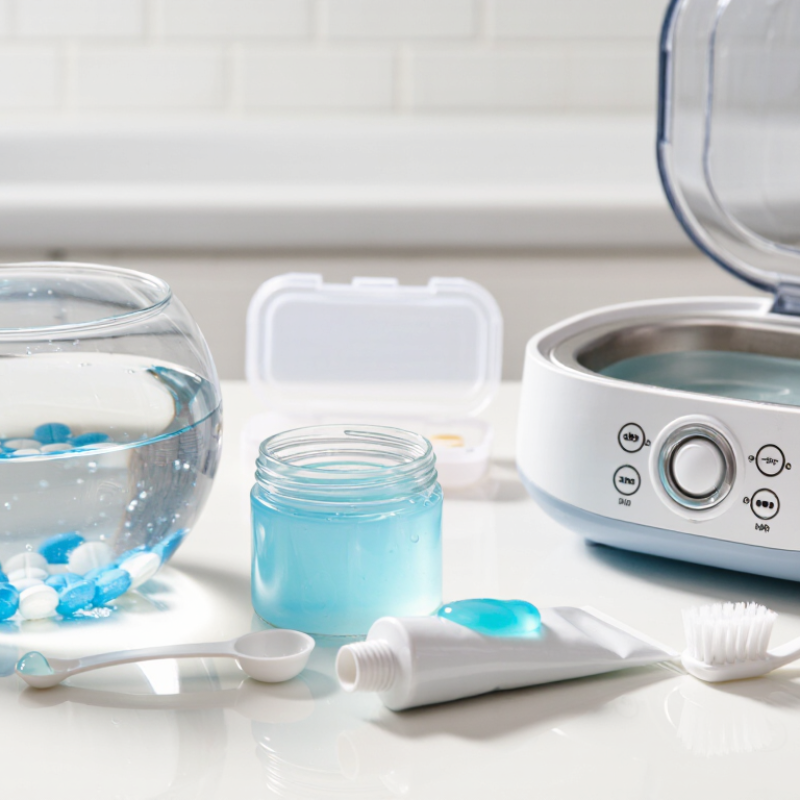
Denture cleaners are products or devices designed to loosen food debris, reduce surface stains, and help control microbial buildup on removable dentures. Common options include soaking tablets, liquid solutions, and ultrasonic devices. They support daily denture hygiene, but they do not replace brushing the denture and cleaning the mouth. Follow the product directions; some formulas may damage certain materials. Small details matter.
The need is substantial. The World Health Organization’s Global Oral Health Status Report 2022 estimates complete tooth loss affects about 7% of people aged 20 and older, rising to 23% among adults aged 60 and older worldwide. These figures describe tooth loss, not denture use, so they should not be treated as a direct estimate of cleaner demand. Still, they show why practical denture care matters. A clean denture can reduce visible residue and odor, while poor cleaning may leave deposits around clasps and along the gum-facing surface. That part is easy to miss. Cleaning needs also vary by denture material, fit, and a person’s health; a cleaner cannot correct a loose or painful denture. WHO’s report provides global context, while individual care advice should come from a dental professional.
2026 Top Denture Cleaner Types for Global Buyers
Denture cleaners help remove food debris, plaque and stains from removable dentures. This chart compares common cleaner types by their primary cleaning mechanism. A value of 1 indicates that the mechanism is characteristic of the type; it does not represent market share or cleaning effectiveness.
Effervescent tablets and liquid cleansers work through chemical immersion, denture brushes provide mechanical cleaning, and ultrasonic devices use ultrasonic agitation. Follow the product instructions and your dental professional’s advice.
Main Types of Denture Cleaners Available in 2026
2026 Top Denture Cleaner Types for Global Buyers
Main Types of Denture Cleaners Available in 2026
Denture cleaners generally fall into five practical types: effervescent tablets, soaking liquids, powders, ultrasonic devices, and dedicated brushes. Tablets are lightweight and simple to portion; they fizz in a cup while the denture soaks. Liquids suit regular soaking, while powders offer compact storage but need careful measuring. Always check product directions and denture material compatibility. Small details matter.
Ultrasonic devices use vibration to loosen debris, but they do not replace brushing or an appropriate cleaning solution. A soft denture brush helps remove visible deposits from grooves and inner surfaces. The WHO’s Global Oral Health Status Report (2022) estimates that oral diseases affect nearly 3.5 billion people worldwide. That figure is not a denture-cleaner sales measure, but it highlights the broad need for accessible oral care. The category labels sound tidy; daily routines are not. Buyers should compare cleaning steps, rinse requirements, portability, and material guidance, then confirm suitability with a dental professional.
How Different Denture Cleaners Remove Plaque and Stains
Effervescent tablets work through bubbling and cleaning agents that loosen food residue and some surface stains during soaking. They are convenient for daily care, especially when a denture has grooves that are hard to reach. The solution still needs time to work; a quick dip may not remove much buildup. Some formulas also contain enzymes that help break down protein deposits. Not magic. Follow the product instructions, since unsuitable solutions can damage certain denture materials.
Denture brushes remove plaque through gentle mechanical action. Use a soft brush and clean over a basin of water, so a dropped denture is less likely to crack. Brushing can reach the inner surface, but aggressive scrubbing may leave scratches where deposits collect. Ultrasonic cleaners use sound waves to agitate water or cleaning solution around the denture. They can help dislodge debris from small crevices, but results depend on the device and cleaner used. A bright-looking denture is not proof that every deposit is gone. Hardened tartar and persistent stains may need assessment by a dental professional; home cleaning methods cannot reliably remove every deposit. Rinse thoroughly before wearing.
Comparing Denture Cleaner Types by Safety and Convenience
For global buyers, denture cleaner choice often comes down to daily routine and material compatibility. Effervescent tablets dissolve in water and are easy to pack, store, and measure. They suit people who prefer a simple soak while getting ready. Follow the product directions and rinse dentures thoroughly before wearing them. Small detail: water temperature matters. Some instructions specify cool or lukewarm water, not hot.
Ultrasonic cleaners use vibration to loosen debris from hard-to-reach areas. They can reduce hands-on brushing, but still require water and regular device cleaning. Check that the device and cleaning solution are suitable for the denture material. The trade-off is real. Manual brushing offers control and needs no electricity, but it takes time. Use a denture brush and a cleaner intended for dentures; abrasive household products may scratch surfaces.
Safety should guide convenience. A short ingredient list does not automatically mean a product suits every denture or wearer. Read the label, avoid mixing cleaners, and ask a dental professional about special materials or persistent irritation. For travel, tablets may be easier to carry; at home, an ultrasonic unit may fit a steady routine. I would not assume one method is best for everyone. Daily habits, fit, and care instructions all matter.
2026 Top Denture Cleaner Types for Global Buyers - Comparing Denture Cleaner Types by Safety and Convenience
| Cleaner type | How it works | Typical convenience | Safety considerations | Best suited for | Key limitation |
|---|---|---|---|---|---|
| Alkaline peroxide tablets | Dissolve in water and release cleaning agents that loosen debris and help reduce stains and odor. | High: pre-measured tablets are portable and require little preparation beyond soaking and rinsing. | Use at the labeled dilution and soak time. Do not swallow the solution or place the tablet in the mouth; rinse the denture thoroughly before wearing. | Many removable full and partial dentures, when the product label confirms material compatibility. | May not remove hardened deposits by itself; follow care instructions for dentures with metal components. |
| Sodium hypochlorite solutions | A diluted bleach-based solution can disinfect and help remove stains from compatible denture materials. | Moderate: requires careful dilution, timed soaking, and thorough rinsing. | Can corrode or discolor metal components and may damage some materials. Use only when directed for the specific denture; never mix with other cleaners, and keep away from eyes and children. | Compatible all-acrylic dentures when recommended by a dental professional or product instructions. | Generally unsuitable for dentures containing metal unless the instructions explicitly confirm compatibility. |
| Enzymatic cleaners | Enzymes help break down organic deposits such as food residues and some components of plaque. | Moderate to high: often supplied as a soak product, with preparation and timing determined by the label. | Follow product directions and rinse before wearing. Avoid contact with eyes and do not ingest the solution. | Routine cleaning where an enzyme-based formula is compatible with the denture material. | Cleaning performance and soaking time vary by formulation; it may not remove mineral buildup or heavy stains. |
| Ultrasonic cleaning devices | High-frequency vibration in a water bath helps dislodge debris from surfaces and hard-to-reach areas. | High once set up: the device runs a timed cycle, but requires countertop space, cleaning, and sometimes a compatible solution. | Use only as directed and check compatibility with the denture and any attachments. The device does not make a denture sterile; rinse after use. | Users seeking a powered cleaning aid, often alongside brushing or a compatible soak cleaner. | Results depend on the device and cleaning method; it may not remove all plaque, stains, or hardened deposits on its own. |
| Manual brushing with a soft denture brush | Gentle mechanical action removes food debris and surface plaque; a non-abrasive cleanser or mild soap may be used if appropriate. | High: inexpensive and requires no powered equipment, but depends on regular hands-on cleaning. | Brush over a basin of water or a folded towel to reduce breakage risk if dropped. Avoid abrasive cleaners and very hot water, which can damage or distort some dentures. | Daily cleaning of most removable dentures, using a brush and cleanser suitable for the material. | Requires consistent technique and may not reach every recess without careful brushing. |
| Acid-based deposit removers | Formulated acids help dissolve mineral deposits and tartar-like buildup from dentures. | Moderate: generally used as an occasional soak according to product directions rather than as an everyday cleaner. | Use only a product intended for dentures, observe the specified time, and rinse thoroughly. Confirm compatibility with metal parts and other materials. | Occasional removal of mineral deposits when recommended and material-compatible. | Not a substitute for routine daily cleaning; unsuitable formulas or overlong soaking can damage denture materials. |
| Buyer note: Denture materials and care instructions vary. Check the product label and denture-care guidance before use, especially for partial dentures with metal components. Remove dentures for cleaning, rinse thoroughly before reinsertion, and consult a dental professional about persistent deposits or fit changes. | |||||
Key Factors Global Buyers Should Consider When Selecting Denture Cleaners
For global buyers, selecting a denture cleaner starts with the denture material and the user’s routine. Acrylic, metal, and flexible components may respond differently to cleaning agents. Effervescent tablets are convenient for soaking, while brushes can help remove visible debris. Format alone proves little. Check the product instructions for compatible materials, soaking times, and whether brushing is recommended. If guidance is unclear, ask a dental professional before making a large purchase.
Look for clear ingredient information, practical directions, and evidence supporting the product’s cleaning claims. Consider residue, fragrance, and how easily users can rinse the denture afterward. Packaging matters too. A jar may suit a care facility, while individually sealed tablets can be easier to distribute across locations. Check that labels and instructions can be understood by the intended users, especially when products will be sold in several languages or markets.
Buyers should also assess shelf life, storage conditions, batch traceability, and the supplier’s quality documents. Requirements differ by destination, so confirm local product and labeling rules with qualified advisers. Request samples and test them on suitable materials before committing to volume. A tidy comparison chart can miss real-world issues, such as tablets dissolving slowly in cool water. That detail is easy to overlook. Even a careful trial may not reflect every user’s daily routine.
FAQS
They bubble in water and help loosen food residue and some surface stains. Follow the stated soaking time. A quick dip may do little.
No. Some formulas contain enzymes that help break down protein deposits. Check the ingredient information and directions.
Use a soft brush over a basin filled with water. This can help protect the denture if it slips. Avoid aggressive scrubbing; scratches can trap deposits.
No. Sound waves agitate water or cleaning solution and may dislodge debris from small crevices. Results depend on the device and cleaner. A bright surface proves little.
Check compatibility with the denture materials, such as acrylic, metal, or flexible components. Review soaking times and brushing guidance. If unclear, ask a dental professional.
A jar may work well in a care facility. Individually sealed tablets can be easier to distribute across locations. Labels should be easy for users to understand.
Check shelf life, storage conditions, batch traceability, and quality documents. Request samples before placing a large order. Paperwork matters, but real use matters too.
Follow the directions on suitable denture materials. Notice residue, fragrance, rinsing, and how quickly tablets dissolve in cool water. One trial may not reflect every routine.
A dental professional can assess them. Home cleaning methods may not remove every deposit. Rinse the denture thoroughly before wearing it.
Conclusion
In 2026, denture cleaners remain an important part of daily oral care, helping remove food residue, plaque, and surface stains from removable dentures. Common options include soaking tablets or powders, ready-to-use solutions, and mechanical devices such as ultrasonic cleaners. These types work in different ways: chemical formulas loosen deposits during soaking, while ultrasonic devices use vibrations to help dislodge debris from hard-to-reach areas. Some products combine approaches, but no cleaner should replace brushing and routine denture care.
When comparing a Denture Cleaner, users and global buyers should consider material compatibility, cleaning effectiveness, ease of use, instructions, storage, and suitability for different denture designs. Safety and convenience matter too: products should be handled as directed, kept away from children, and rinsed from dentures when required. Buyers can also assess packaging, shelf life, shipping practicality, and the clarity of product information. Selecting a suitable cleaner means balancing reliable daily performance with the needs of users, care providers, and distribution markets.

Blog Tags: